Trip to Chikmagalur |
| DURATION - 2 NIGHTS / 3 DAYS |
| |
DAY 01 : BANGALORE - COORG
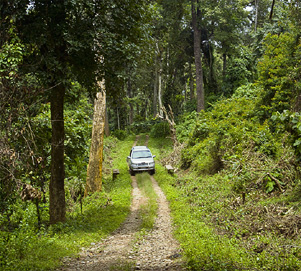 Nestled in the Sahyadri Mountains of the Western Ghats, Chikmagalur is situated in south-western part of Karnataka. This beautiful Malnad district is full of surprises such as, hills, waterfalls, temples, wildlife sanctuary etc. District offers unending views of mountains, streams, and coffee & pepper plantations. Rivers such as Tunga & Bhadra have their sources here in these mountains. It was in Chikmagalur, that Coffee was cultivated first time in India. Mullayanagiri is the highest peak in Karnataka, again part of Chikmagalur district. Nestled in the Sahyadri Mountains of the Western Ghats, Chikmagalur is situated in south-western part of Karnataka. This beautiful Malnad district is full of surprises such as, hills, waterfalls, temples, wildlife sanctuary etc. District offers unending views of mountains, streams, and coffee & pepper plantations. Rivers such as Tunga & Bhadra have their sources here in these mountains. It was in Chikmagalur, that Coffee was cultivated first time in India. Mullayanagiri is the highest peak in Karnataka, again part of Chikmagalur district.
|
| |
Location - About 250km from Bangalore
How to reach - About 5hrs drive
Recommended duration of the stay – 2 nights & 3 days
Things to do – Sightseeing, trekking, rock climbing, rafting etc ... |
| |
| MAJOR TOURIST SPOTS IN CHIKMAGALUR |
| |
| KEMMANNAGUNDI (about 55 kms) : |
| Favourite summer spot of Wodeyar family, Kemmangundi is surrounded by thick forests and a salubrious climate throughout the year. This is blessed with gorgeous waterfalls & thick vegetation. On top of the hill, one can enjoy beautiful rose garden & enchanting views of mountains & valley. There are few trekking routes in this area such as trek to Kallathigiri waterfalls, Hebbe waterfalls & to Z point, especially to watch the sun set. |
| |
| MULLAIYANAGIRI (about 16 kms) : |
| One of the great trekking points in Karnataka, Mullayanagiri is the tallest peak (1930 mts) in the state. Driving to Mullayanagiri itself is an experience as roads are narrow with steep cliff on one side. Driving up to the top is not possible & one has to trek for about 2 kms. |
| |
| BHADRA SANCTUARY (about 38 kms) : |
| Sanctuary is surrounded by Mullaianagiri, Hebbegiri, Gangegiri & Bababudangiri hills and has tributaries of Bhadra River flowing through it. The forests here are rich with bamboo & bird species. |
| |
| KUDREMUKH (about 95 kms) : |
| Place is so named because of unique shape of Kudremukh peak. Broad hills here are chained to one another with deep vallyes, makes ideal place for trekking. The land here grows coffee, areca nut, palms, cardamom & mango. Place is rich in iron ore deposit. Kudremukh town was set up by the Kudremukh Iron Ore Company Ltd (KIOCL), like an American town, with wide roads, open spaces & low buildings; it is a pleasant place to visit. |
| |
Places to see around Kudremukh:
KUDREMUKH PEAK (6250 ft) :
This peak is situated just before the town. To reach the top, one needs to hike a bit. On a clear day, blue edge of the Arabian sea is visible from the top. Peak is generally closed during the summer due to forest fire fear.
LAKYA DAM :
Located just outside Kudremukh, dam is built by KIOCL to deposit the red sludge from its mines. It is a great place for evening walk.
KUDREMUKH NATIONAL PARK :
Located about 10 kms from the town, consist evergreen rain forests & is extremely beautiful. Forests here is thick, hence big game sightings are rare. Places worth visiting within the park are Hanuman Gundi waterfalls & Gangamoola, where the Tunga, Bhadra & Netravati rivers originate. |
| |
| SRINGERI (about 90 kms) : |
| Sringeri is located on the banks of River Tunga, is a vedic Peeta established by Sri Adi Shankara, the exponent of the Advaita Philosophy. Place is famous for Vidyashankara Temple. In the temple there are 12 Zodiac pillars which are so constructed that the rays of the sun fall on the pillar corresponding to the month. |
| |
| HORANADU (about 100 kms) : |
| Known for ancient Annapoorneshwari temple, located midst of thick forest & valleys. |
| |
| Visit Chikmagalur |
| |
| DURATION – 2 NIGHTS / 3 DAYS |
| |
| DAY 01: BANGALORE - CHIKMAGALUR |
| Pick up from your residence in Bangalore by 0630 hrs. & drive to Chikmagalur
(About 5 ½ hrs. drive) Check in to the hotel. Later visit Mullaiyanagiri (The highest peak in Karnataka, Ideal place to watch sunset). Back to hotel overnight stay in Chikmagalur. |
| |
| DAY 02: CHIKMAGALUR |
| After early breakfast, visit Kemmannagundi & Kalathigiri waterfalls. Overnight stay in Chikmagalur. |
| |
| DAY 03: CHIKMAGALUR - BANGALORE |
| After the breakfast check out by 1100 hrs. Drive back to Bangalore. |
| |
| PACKAGE COST: |
|
| |
|
| NOTE: Rate may subject to change |
| |
| For more details, contact – enquiry@crimsonhlidays.in |